Invoice. Receipt. Bill. These words get used interchangeably all the time — even by experienced business owners. But they mean very different things, and using the wrong document at the wrong time can create confusion, payment disputes, and accounting errors.
This guide breaks down the invoice vs receipt debate clearly, so you always know which document to use, when to use it, and what each one should contain.
What Is an Invoice?
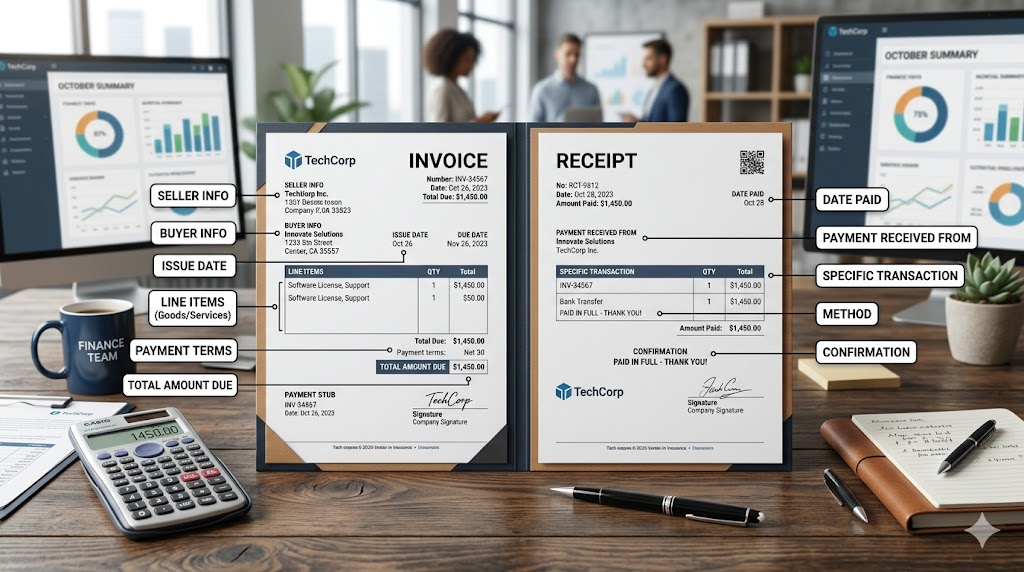
An invoice is a payment request sent by a seller to a buyer before payment is made. It's a formal document that says: "Here's what you owe me, and here's when I expect payment."
Invoices are typically sent after a service is delivered or at an agreed billing milestone. They create a legal record of the transaction and establish the terms under which payment is due.
Key characteristics of an invoice:
- Sent before payment is received
- Includes a due date
- Contains an invoice number for tracking
- Itemizes products or services with prices
- States payment terms (Net 15, Net 30, etc.)
- May be unpaid, partially paid, or overdue
What Is a Receipt?
A receipt is proof of payment — a document confirming that a transaction has been completed. It's issued after payment is received.
Think of a receipt as the final step in a transaction. It confirms that the buyer has paid and the seller has received the funds.
Key characteristics of a receipt:
- Issued after payment is made
- Confirms the amount paid and the payment method
- Has no due date (payment is already complete)
- Used for accounting, expense tracking, and refund claims
- Commonly seen in retail, online purchases, and service businesses
Invoice vs Receipt: Side-by-Side Comparison
| Feature | Invoice | Receipt |
|---|---|---|
| Timing | Sent before payment | Issued after payment |
| Purpose | Payment request | Proof of payment |
| Payment Status | Unpaid / pending | Paid / completed |
| Due Date | Yes | No |
| Invoice Number | Yes | Optional |
| Legal Record | Yes | Yes |
| Itemized Details | Yes | Sometimes |
| Used By | Sellers / service providers | Buyers / customers |
When Should You Send an Invoice?
Send an invoice immediately after completing a service, delivering a product, or reaching a billing milestone. The sooner you invoice, the sooner you get paid. Common invoicing triggers include:
- Completing a freelance project or service
- Monthly billing for ongoing retainer clients
- Shipping goods to a business customer (B2B sales)
- Reaching project milestones (50% upfront, 50% on completion)
- Recurring subscription or service billing
When Should You Issue a Receipt?
Issue a receipt immediately after receiving payment. Always provide receipts for:
- Cash payments (paper trail is critical)
- In-person service payments
- Any transaction where the buyer needs proof for expense reporting
- Retail or product sales
Do You Need Both?
Yes — in most business contexts, you need both. The typical flow looks like this: you send an invoice → the client pays → you issue a receipt. The invoice establishes the obligation to pay; the receipt confirms it's been fulfilled.
For freelancers and service businesses, invoices are the primary billing tool. Receipts are often generated automatically by payment processors (PayPal, Stripe, bank transfers).
Accounting platforms like QuickBooks and FreshBooks also recommend keeping invoices and receipts properly organized for accurate bookkeeping.
Create a Professional Invoice in Seconds — Free
Now that you know the difference between an invoice and a receipt, make sure you're using the right tool. iLove Invoice lets you create a professional, PDF-ready invoice for free — no account required, no design skills needed.
Generate your free professional invoice at iLove Invoice — takes less than 2 minutes.